
Myths & Truths about Exercising Injuries
“I know I should be…” is a common statement for physiotherapy patients to make after getting injured from exercising.
Insert into the second half of the sentence one of many options with a tone of guilt.
It is this style of statement that inspires this blog post. I often have my patients admitting to me that they haven’t been stretching after their runs or that they are sure they were moving “wrong” during a workout.
These things that they are listing to me (with a tone of shame) as the cause of their injury often fall into the myth or over-exaggeration category as potential injury causes.
To provide clarity and alleviate present or future guilt, here are three common myths about what increases the risk of injury while exercising, along with three truths to focus on instead.
And to start, a bonus truth: unless you had one big trip, fall, somersault, or splat that caused your injury, likely multiple factors contributed to your exercising injury, rather than a single, simple thing.
With these myths and truths, I hope that you gain some knowledge and a sense of agency around dealing with and preventing injuries while exercising.
Myth #1 – Stretching
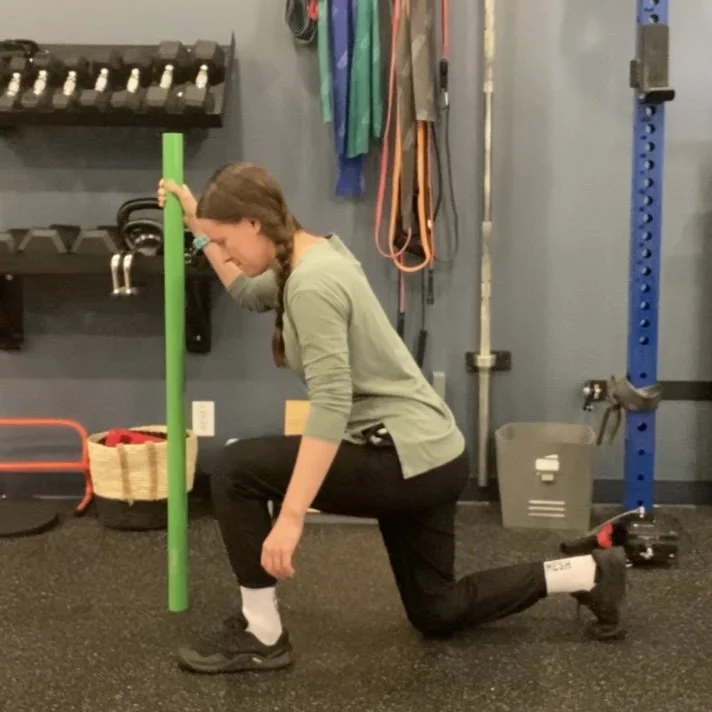
“I haven’t been doing my stretching” is the most common guilty admission I hear from patients about their exercise routine leading up to an injury.
Let me set the record straight. Whether you are or are not stretching is not a primary factor in your chances of getting injured. This applies to both stretching before and after exercise.
This myth of stretching being a key to injury prevention is long-standing and has been investigated by researchers, with inconclusive results. Multiple systematic reviews have concluded that the injury-prevention benefits of stretching are unconvincing1,2.
There are specific sports where stretching beforehand can be helpful. These are situations when the activity requires your body to move in a particular way, and prepping for this flexibility requirement is useful. This is true for soccer players and stretching their hamstrings (gently and dynamically) before getting on the pitch and placing their hamstrings in repeated lengthened positions when kicking soccer balls.
This is the exception.
In general, when doing cardiovascular workouts, fitness classes or strength workouts, a pre- or post-stretching routine does not prevent or influence your risk of getting injured when exercising.
Truth #1 - Sleep!
Focus instead on improving the quantity of your sleep.
Sleep, and more specifically less than 7 hours of sleep on consecutive nights, increases your injury risk3.
With this knowledge, here are two action points to take:
#1 - If you are able to, work on consistently getting 7+ hours of sleep per night.
#2 - If you are not able to get this amount of sleep due to life factors (caregiving responsibilities, health concerns, shift work), consider slowing the pace of changes and progressions in your workout plans and increasing the importance of putting into practice truths #2 and 3.
Myth #2 - Exercise Technique
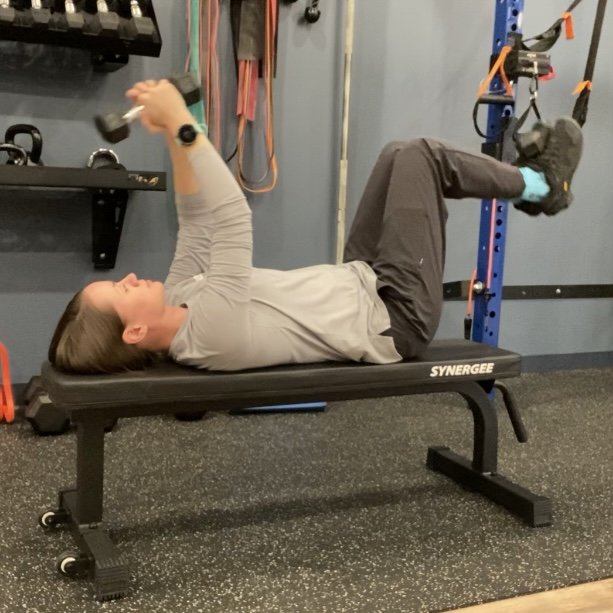
When you start a new workout routine, let’s say specifically, you start doing squats. If, soon after your knee begins to hurt, a common (and logical) conclusion is to think that your knee hurts because of your squatting. I frequently hear patients take this conclusion a step further, that it is how they are squatting, specifically their exercise technique, that is to blame for the knee pain.
You can also apply this thought process to calf pain after starting to run, shoulder pain after adding in bench press, or elbow pain after doing pull-ups, et cetera.
Perfect exercise technique is highly debatable and varies between people. It is rarely fully responsible for injuries.
In squats, for example, if your knees move inwards (often described as caving in and technically called a valgus knee position), this is often seen as a technique flaw. In reality, it is a movement pattern correlated with squatting heavy weight (i.e., above 80% of your 1 rep maximum), ankle mobility, and hip strength4 rather than injury.
Instead of your new knee pain being caused by how you are squatting, it is more likely linked to the volume and weight you are starting at and quickly ramping up to with your new workout routine.
Truth #2 - Pace of progression (too much too soon)!
The volume of exercise you have started working out at, and your pace of progression for your weights, running speed or cardio intensity, are more likely to be the culprits of pain and injury after starting an exercise routine than your specific exercise technique.
With this knowledge, here are three action points to take:
#1 - When starting a new strength workout or movement, consider starting with 50% of the sets, reps, and weight you plan to use, or with what you were doing if your break from working out has been longer than 1 month.
My most frequent first workout set/rep scheme for physio patients is 3 sets of 5 reps.
#2 - Focus on steady and consistent progress rather than big jumps. If you go to a commercial gym, make use of the 2.5 lb plates and the in-between dumbbell weights of 8, 12 and 17.5 lbs.
#3 - For cardio, progress one variable at a time. If you are planning a longer workout, wait until the next session to ramp up the intensity.
Myth #3 – Footwear
This final myth is most applicable to runners. It is the myth that their shoes are to blame for their foot, knee, hip, and back pain that occurs during (or after) running.
While running in a shoe that is the wrong size or has a makeup very different from your previous running shoes can cause issues, in general, your running footwear is overly and unfairly blamed for running-related injuries5.
Additionally, there is no specific shoe type that will protect you from future running injuries based on your specific body6.
Truth #3 - Building strength
While careful selection of your running footwear will not significantly reduce your risk of injury while running, building strength in your hip and leg muscles will reduce the likelihood of getting a running injury.
With this knowledge, here are two main action points to take:
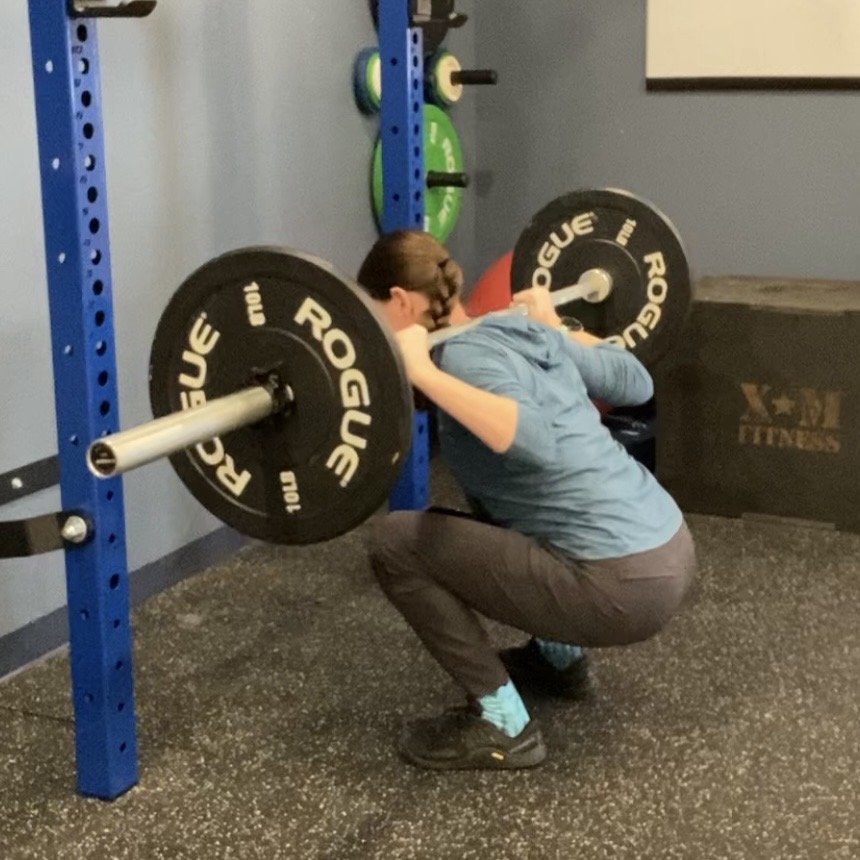
#1 - Select your preferred variation of a lunge, step-up or squat.
#2 - Complete this movement 2x/week, gradually increasing the difficulty level by increasing the number of reps and adding in weights.
Summary
Getting injured while exercising is common and frustrating. There are common myths about potential causes of these injuries, as well as things you can do to reduce the likelihood of an injury occurring.
Moving forward, to help you continue with consistent exercise, consider including:
● Prioritizing good sleep in addition to your exercise plan
● Progressing the amount and intensity of your exercises gradually
● Including strength-building exercises in your workout plan
Everyone is different, and these myths and truths are for general educational purposes. For help in troubleshooting factors relating to a specific injury, I recommend booking with a physiotherapist well-versed in exercise programming.
At REclaim Physiotherapy you can book a Strength Assessment with me to establish an exercise plan based on your goals, challenges and current physical capacity.
Joanna Marriott BKinH, MScPT
References:
1) Weldon SM, Hill RH. The efficacy of stretching for prevention of exercise-related injury: a systematic review of the literature. Man Ther. 2003 Aug;8(3):141-50. doi: 10.1016/s1356-689x(03)00010-9. PMID: 12909434.
2) Lewis J. A systematic literature review of the relationship between stretching and athletic injury prevention. Orthop Nurs. 2014 Nov-Dec;33(6):312-20; quiz 321-2. doi: 10.1097/NOR.0000000000000097. PMID: 25401202.
3) Charest J, Grandner MA. Sleep and Athletic Performance: Impacts on Physical Performance, Mental Performance, Injury Risk and Recovery, and Mental Health. Sleep Med Clin. 2020 Mar;15(1):41-57. doi: 10.1016/j.jsmc.2019.11.005. PMID: 32005349; PMCID: PMC9960533.
4) Lima YL, Ferreira VMLM, de Paula Lima PO, Bezerra MA, de Oliveira RR, Almeida GPL. The association of ankle dorsiflexion and dynamic knee valgus: A systematic review and meta-analysis. Phys Ther Sport. 2018 Jan;29:61-69. doi: 10.1016/j.ptsp.2017.07.003. Epub 2017 Jul 19. PMID: 28974358.
5) Dhillon GK, Hunt MA, Reid AL, Esculier JF. What are the perceptions of runners and healthcare professionals on footwear and running injury risk? BMJ Open Sport Exerc Med. 2020 Jun 30;6(1):e000767. doi: 10.1136/bmjsem-2020-000767. PMID: 32626599; PMCID: PMC7328975.
6) Relph N, Greaves H, Armstrong R, Prior TD, Spencer S, Griffiths IB, Dey P, Langley B. Running shoes for preventing lower limb running injuries in adults. Cochrane Database Syst Rev. 2022 Aug 22;8(8):CD013368. doi: 10.1002/14651858.CD013368.pub2. PMID: 35993829; PMCID: PMC9394464.