
Is Frozen Shoulder More Than Orthopedic Condition?
What Is Frozen Shoulder?
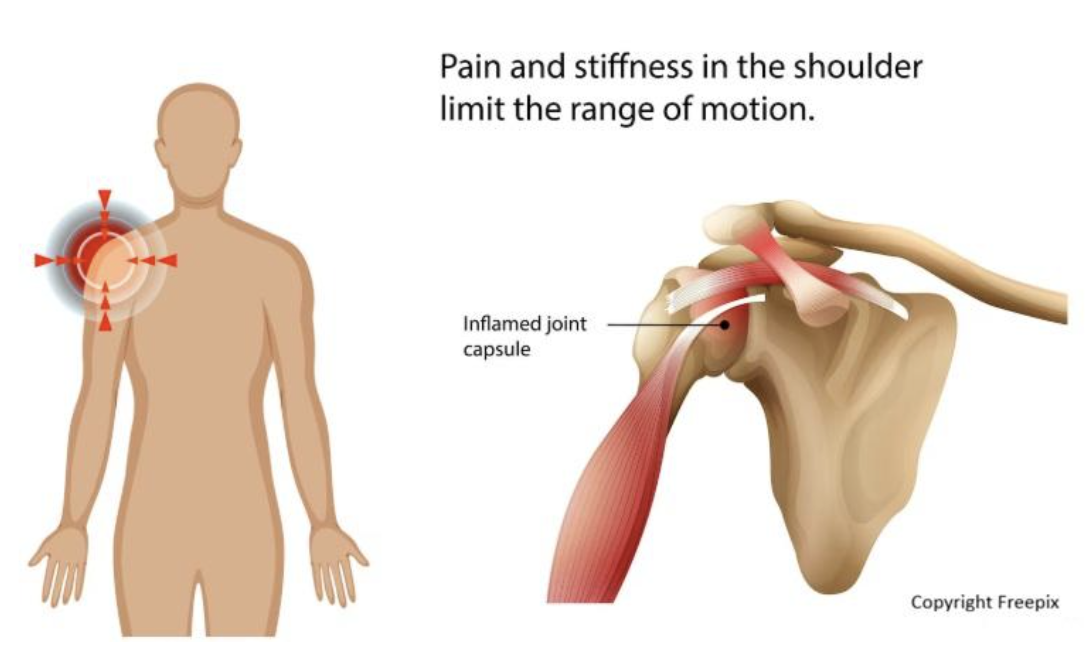
Frozen shoulder is the common term used to describe adhesive capsulitis, it is characterized by severe shoulder pain, loss of mobility and thickening/adhesions of the joint capsule - the tissues that surround the shoulder joint.
Who Gets Frozen Shoulder?
Frozen shoulder is classified in two categories:
Primary or idiopathic: not related to any specific incident, develops spontaneously
Secondary: develops after injury, surgery or a period of immobilization
2-5% of the general population is affected by frozen shoulder. Those with diabetes, thyroid disorders and autoimmune disorders are at higher risk. It is estimated that 85% have comorbidities (an existing condition), and 37% have more than 3 comorbidities.
Primary frozen shoulder most often occurs between the ages of 40-65 and has a higher prevalence in women than men.
How Long Does Frozen Shoulder Last?
Historically, frozen shoulder was described as a self-limiting condition meaning it could resolve on its own over time, and was broken into 3 distinct phases each with their own timeline:
Freezing – painful, can be worse at night and progressive loss of shoulder movement lasting on average 2 to 9 months
Frozen – decrease in pain, persistent stiffness lasting 4 to 12 months
Thawing – reduction in pain and gradual return of mobility 12- 42 month
Everyone will recover on a different timeline, depending on multiple factors such as severity of pain, how much mobility was lost, comorbidities, and the treatments received. It is estimated that 80-95% of individuals with frozen shoulder have a successful recovery. The most common residual side effects are low level pain and movement restriction.
How Does Primary Frozen Shoulder Show Up On Imaging?
Imaging is not required to diagnose frozen shoulder and is typically used to rule out other potential causes of shoulder pain. Potential imaging results might include:
Xray’s: normal, no findings
Ultrasound: most ultrasounds return normal findings; however, there may find thickening of the coracohumeral ligament or inferior glenohumeral capsule.
MRI: may show abnormal thickening of the coracohumeral ligament, inferior glenohumeral ligament, joint capsule or soft tissues in the rotator interval.
What Are the Standard Treatments For Frozen Shoulder?
Depending on your symptoms typical orthopedic focus treatments may include the following:
Physiotherapy
Shockwave
Pain medications
Cortisone injections
Hydrodilatation
Suprascapular nerve block
Manipulation under anesthesia
Arthroscopic capsular release
Is Frozen Shoulder Just a Local Joint Condition?
Research suggests primary frozen shoulder is more than an isolated orthopedic joint condition and may emerge from an interaction of hormonal, metabolic, vascular, inflammatory, and lifestyle factors over time such as:
High blood sugar and insulin resistance
Poor lipid (cholesterol) balance
Chronic low-grade inflammation
Thyroid disorders
Poor circulation and blood vessel health
Lifestyle factors such as poor diet, lack of exercise, stress, and poor sleep
Why Are Women More Affected?
Research is focused on the effects of estrogen on the body. Estrogen can influence:
Inflammation
Tissue repair
Blood flow
A reduction in estrogen levels or improper functioning as seen during menopause or with metabolic problems may result in the body becoming more inflamed resulting in tissue stiffening and scarring.
I think I have Frozen Shoulder; What should I do?
See a physiotherapist.
They can help determine the cause of your shoulder pain and get you started on treatment program tailored to your needs:
education
pain management strategies
manual therapy
exercise
Make recommendations for further medical treatments/referrals.
See your doctor
Discuss your general health and ensure that conditions such as diabetes, thyroid disorders and autoimmune disorders are being evaluated and well controlled.
Women specifically speak to your doctor about peri-menopausal and menopausal symptoms, hormonal and metabolic function.
Try to reduce your stress
Keep moving and using the arm the best you can, even though it is uncomfortable
Eat a well-balanced diet
Get adequate sleep
Use pain medication as required/recommended by your doctor
Do not ignore your symptoms, early intervention can improve outcomes
Alison Boudreau BScK, MScPT
References:
Brindisino F, Turgut E, Struyf F. Frozen shoulder: exploration of terminology and classification. Frontiers in Rehabilitation Sciences. 2024 Nov 25;5
Achilova F, Daher M, Nassar JE, Daniels AH, Abboud JA. Frozen Shoulder: Diagnosis and Treatment of Adhesive Capsulitis. Am J Med. 2026 Jan 23:S0002-9343(26)
Abrassant S, et al. Frozen Shoulder is ill-defined. How ca it be described better? EFORT Open Rev 2020;5:273-279.
Hill JL. Evidence for Combining Conservative Treatments for Adhesive Capsulitis. Ochsner J. 2024 Spring;24(1):47-52.
Vita F, Pederiva D, Tedeschi R, Spinnato P, Origlio F, Faldini C, Miceli M, Stella SM, Galletti S, Cavallo M, Pilla F, Donati D. Adhesive capsulitis: the importance of early diagnosis and treatment. J Ultrasound. 2024 Sep;27(3):579-587.
de la Serna, D.; Navarro-Ledesma, S.; Alayón, F.; López, E.; Pruimboom, L. A Comprehensive View of Frozen Shoulder: A Mystery Syndrome. Front. Med. 2021
Nagy MT, Macfarlane RJ, Khan Y, Waseem M. The frozen shoulder: myths and realities. Open Orthop J. 2013 Sep 6;7:352-5.
Chanont Kanokvaleewong, Takashi Inoue, Morihito Tokai, Hiroyuki Sugaya, Conservative Treatment for Frozen Shoulder Is Effective Regardless of the Severity of Symptoms, Arthroscopy, Sports Medicine, and Rehabilitation, Volume 7, Issue 3,2025,
Navarro-Ledesma S. Frozen Shoulder as a Systemic Immunometabolic Disorder: The Roles of Estrogen, Thyroid Dysfunction, Endothelial Health, Lifestyle, and Clinical Implications. Journal of Clinical Medicine. 2025; 14(20):7315